
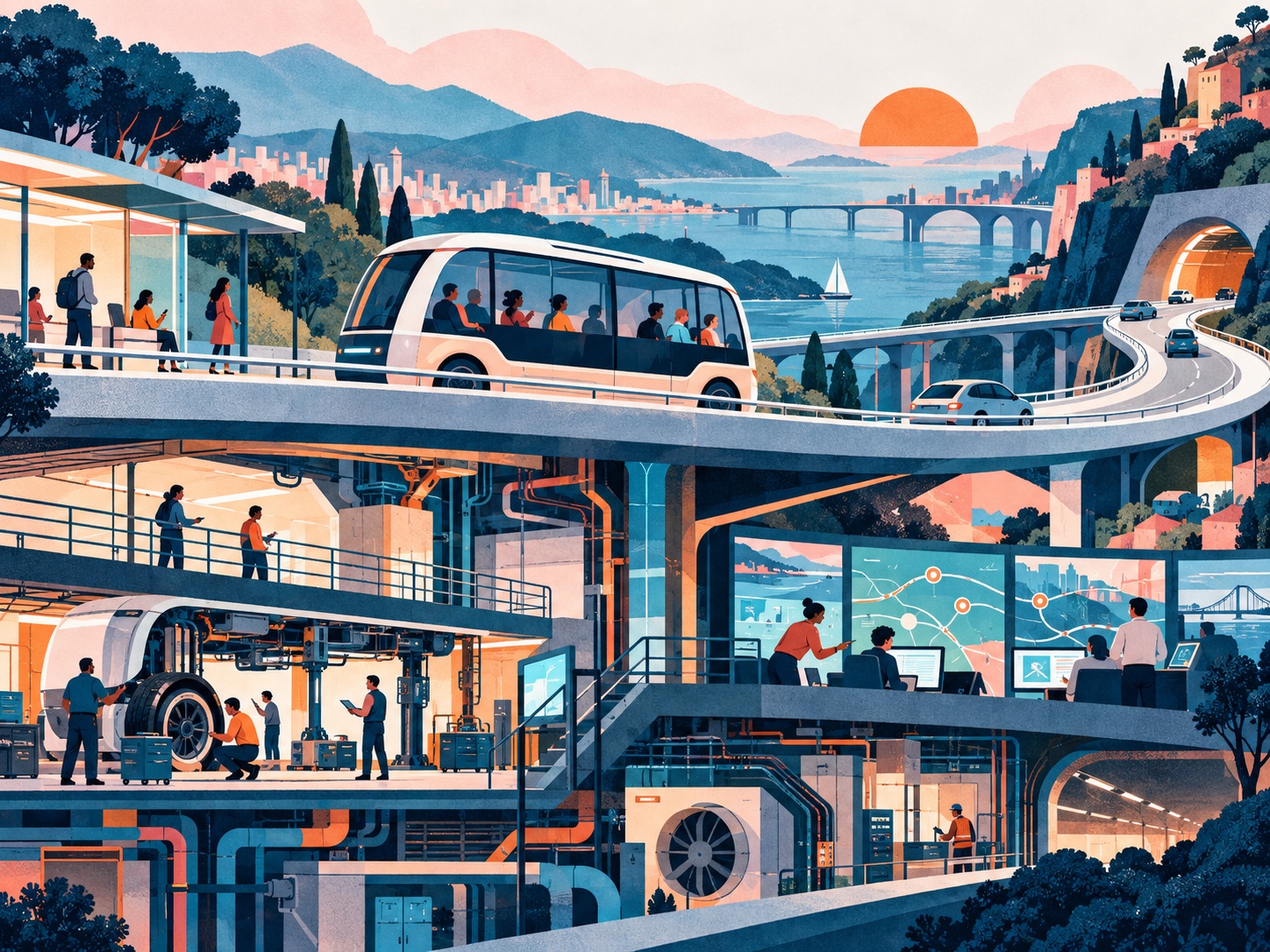
Service design and Customer Experience (CX) work on the same road: the experience a person has in their relationship with an organization. Confusion is understandable because both fields research journeys, observe touchpoints, and seek better outcomes for customers.
The difference appears when we ask what kind of decision each practice needs to make.
The car metaphor
CX work is like driving a car in motion. The team monitors signals, notices changes, responds to incidents, talks with passengers, and tries to improve the ride while it is happening.
Service design works more like designing or rebuilding the vehicle and the road: investigating the engine, controls, traffic rules, maintenance, infrastructure, and conditions that make the ride stable without relying on improvisation.
Both roles are necessary. A well-designed car still needs to be operated and monitored. But even an excellent driver cannot compensate indefinitely for a faulty engine.
What CX often does
CX stays close to ongoing operations. Its responsibilities may include:
- monitoring measures such as satisfaction, effort, complaints, and retention;
- identifying changes in perceived quality;
- listening to customers and organizing feedback;
- coordinating responses across teams;
- adjusting communications and support routines;
- monitoring incidents and opportunities for improvement;
- keeping the organization aware of the experience it delivers.
This work is essential because services change every day. Even a well-designed system must learn from new behaviors, demands, and failures.
What service design adds
Service design becomes important when improving the response is not enough and the structure producing the problem must change. It examines:
- processes, responsibilities, and handoffs between teams;
- business rules and decision criteria;
- capacity, queues, variability, and rework;
- systems and data that do not connect;
- promises that operations cannot keep;
- tools, autonomy, and the experience of people delivering the service;
- partners and dependencies outside the organization.
Its goal is not only to reduce the effect customers notice. It is to change the conditions that make the effect recur.
A direct comparison
| Dimension | CX | Service design |
|---|---|---|
| Central question | How is the experience behaving? | What system is producing this experience? |
| Time horizon | Ongoing operations and improvement | Investigation, transformation, and testing new conditions |
| Evidence | Feedback, satisfaction, complaints, behavior, and measures | CX evidence plus processes, capacity, rules, handoffs, and operational data |
| Typical action | Monitor, respond, align, and improve | Reconfigure roles, flows, rules, channels, and systems |
| Risk when isolated | Becoming permanent containment | Producing a proposal that cannot survive operations |
The table describes emphases, not exclusive territories.
What about “CX Design”?
The label CX Design can mean different things in different organizations. In some, it describes the design of touchpoints and communications. In others, it includes changes to processes, operations, and technology.
When a CX team stops only monitoring the experience and starts redesigning the relationships that produce it, it is doing service design work—even if its job titles remain in CX. This is not a territorial dispute. Problems do not belong to professions.
The most useful criterion is the depth of the intervention:
- if the action improves a message or interaction, the work is at the touchpoint;
- if it changes how teams, rules, and systems coordinate, the work is at the service-system level;
- if it creates ways to monitor and evolve the outcome, it also belongs to ongoing experience management.
A mature organization can combine all three scales without wasting energy arguing over labels.
When CX becomes firefighting
If a journey has structural friction, systems do not communicate, promises exceed capacity, or a process depends on manual exceptions, the CX team ends up putting out fires. It revises scripts, requests fixes, contacts other teams, and tries to calm customers without authority to change the source of the problem.
Asking CX to solve a structural failure alone is like asking the driver to repair the engine while driving. The effort may prevent an immediate breakdown, but it does not create a better vehicle.
How service design makes CX easier
A coherent service architecture reduces the burden of containment:
- channels present consistent information;
- responsibilities are clear;
- systems share the data they need;
- frontline teams have autonomy in predictable situations;
- exceptions have recovery paths;
- promises match actual capacity;
- measures support learning instead of merely assigning blame.
CX gains room to evolve the experience because it no longer spends all its energy patching the structure.
A cycle, not a hierarchy
Service design and CX are not successive rungs on a ladder. Designing better conditions changes the experience; monitoring that experience reveals what the system still needs to learn. The work moves in both directions: system change informs ongoing management, and operational evidence informs the next design decision.
Continue with service design and UX or return to the foundations guide.
Perguntas frequentes
Are service design and CX the same thing?
No, although they overlap. CX often monitors and improves the experience as it happens; service design works with the operational relationships, rules, roles, and systems that produce it.
Can a CX team do service design?
Yes. When a CX team redesigns processes, responsibilities, systems, and delivery conditions, it is doing service design work, regardless of its job title.
Which discipline matters more?
Neither works well alone. Service design without operations becomes a proposal; CX without the ability to change structural causes can become permanent containment.